Long An, Vietnam
LOTUS CLUBHOUSE
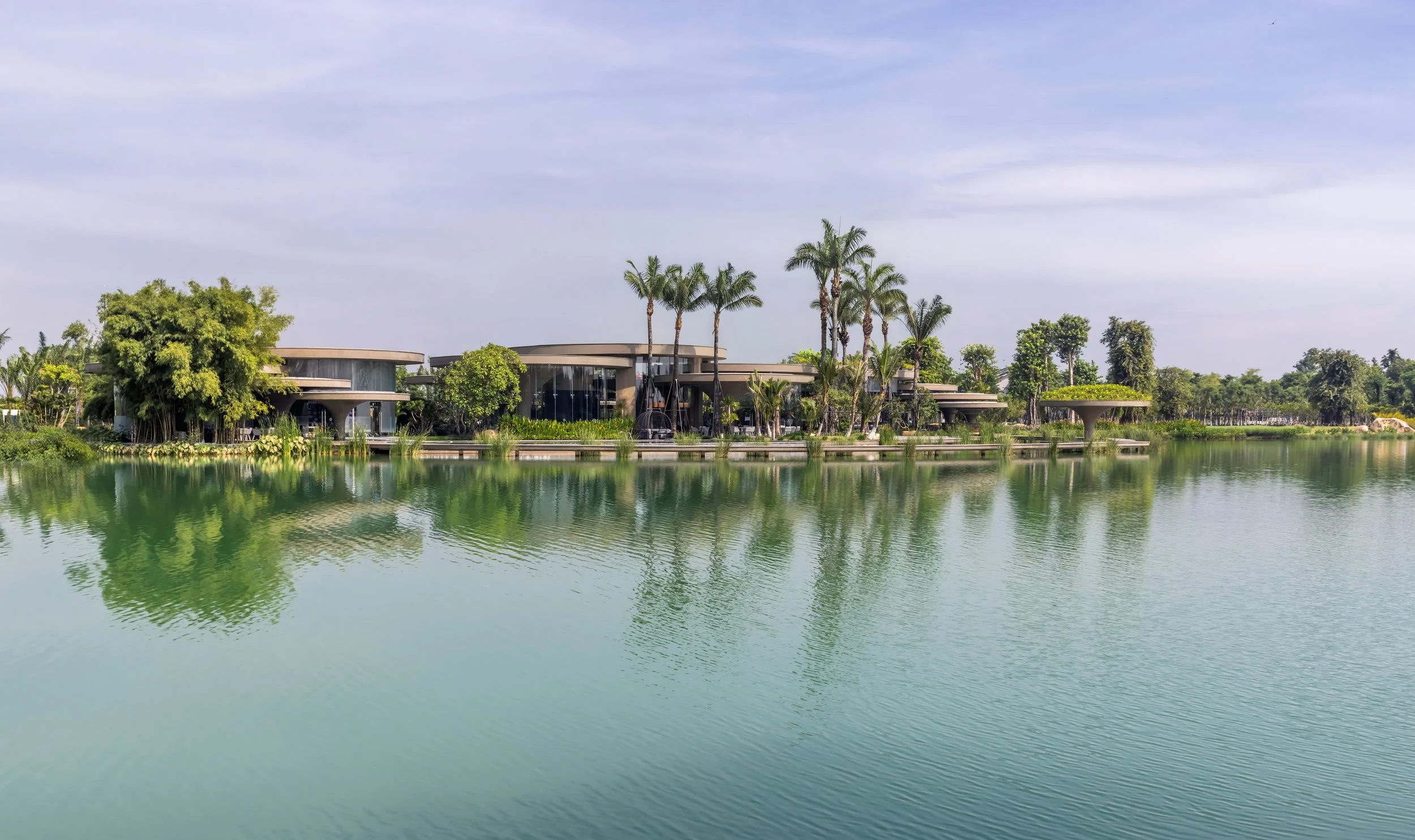
Lotus Clubhouse was conceived as a living organism, breathing in harmony with the terrain and the surrounding natural environment. Rather than appearing as an isolated architectural mass, the building seems to emerge from the ground itself, shaped by natural slopes, layers of vegetation, and its orientation toward the lake. From the earliest conceptual sketches, the project was defined as an ongoing dialogue between architectural form, landscape, and local cultural context, reflecting MIA Design Studio’s design philosophy of creating architecture that coexists with nature. As such, the boundaries between the structure and its environment gradually dissolve. Lotus Clubhouse is at once architecture and landscape; a place of shelter for people and an extended habitat for nature.
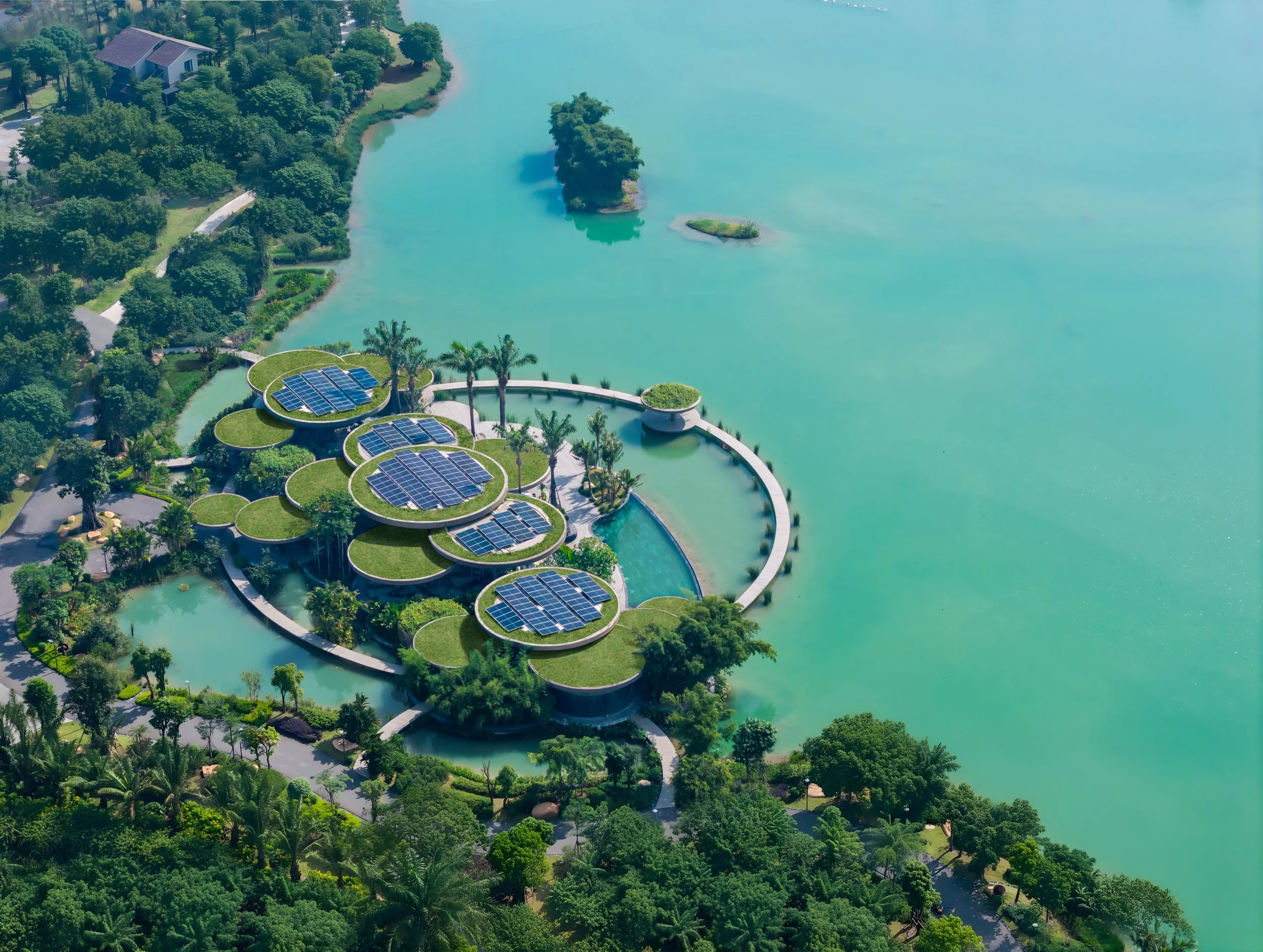
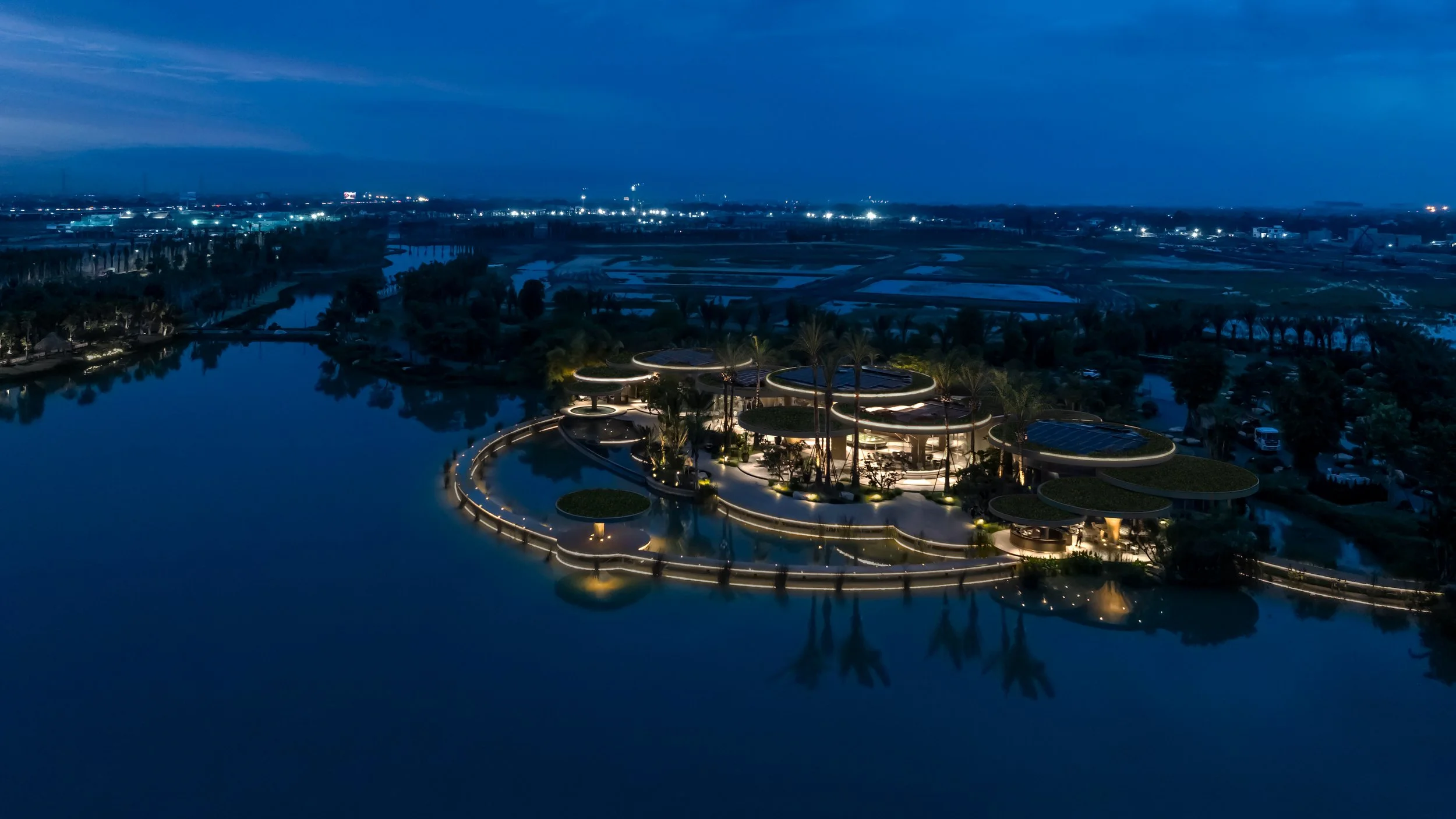
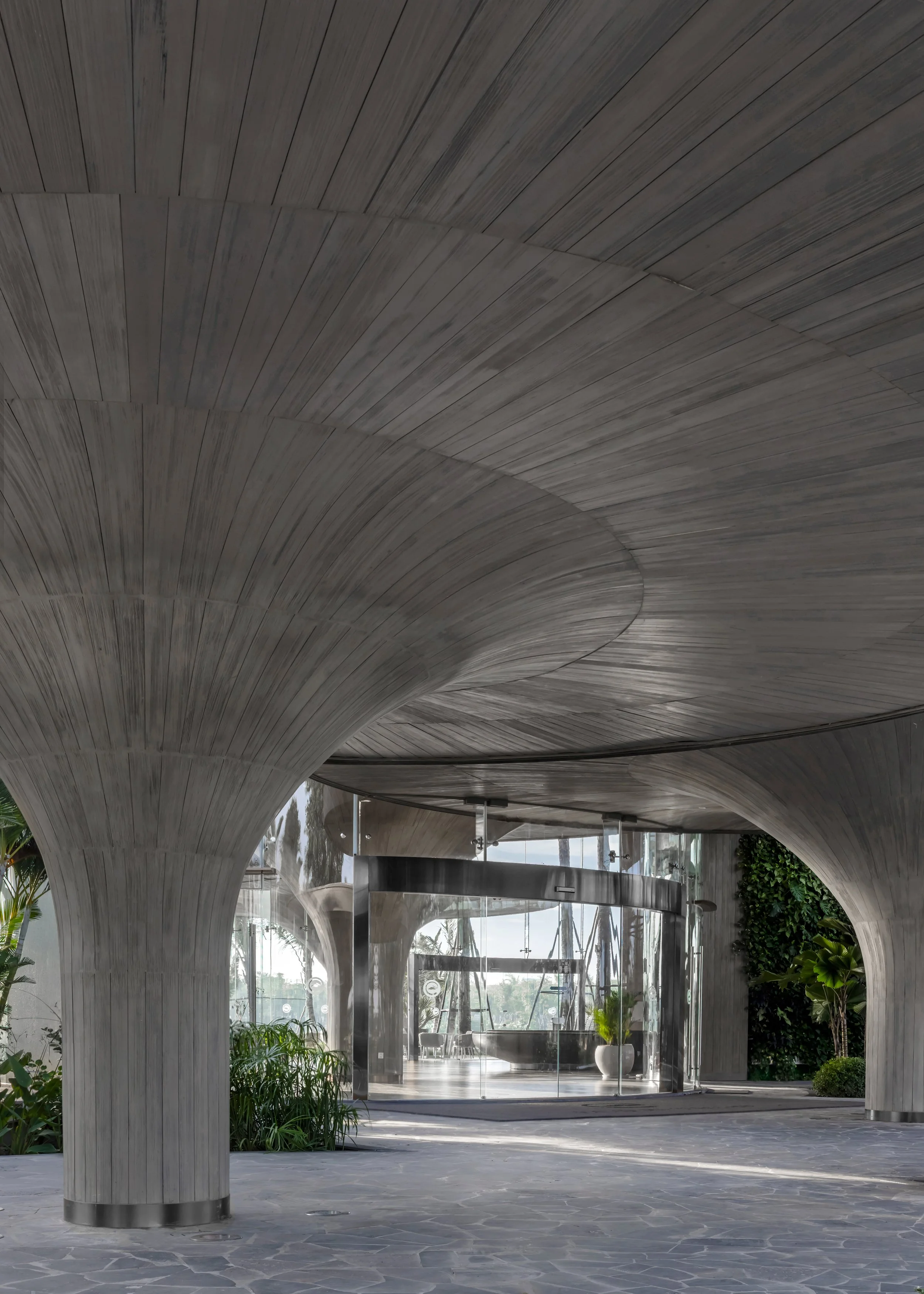
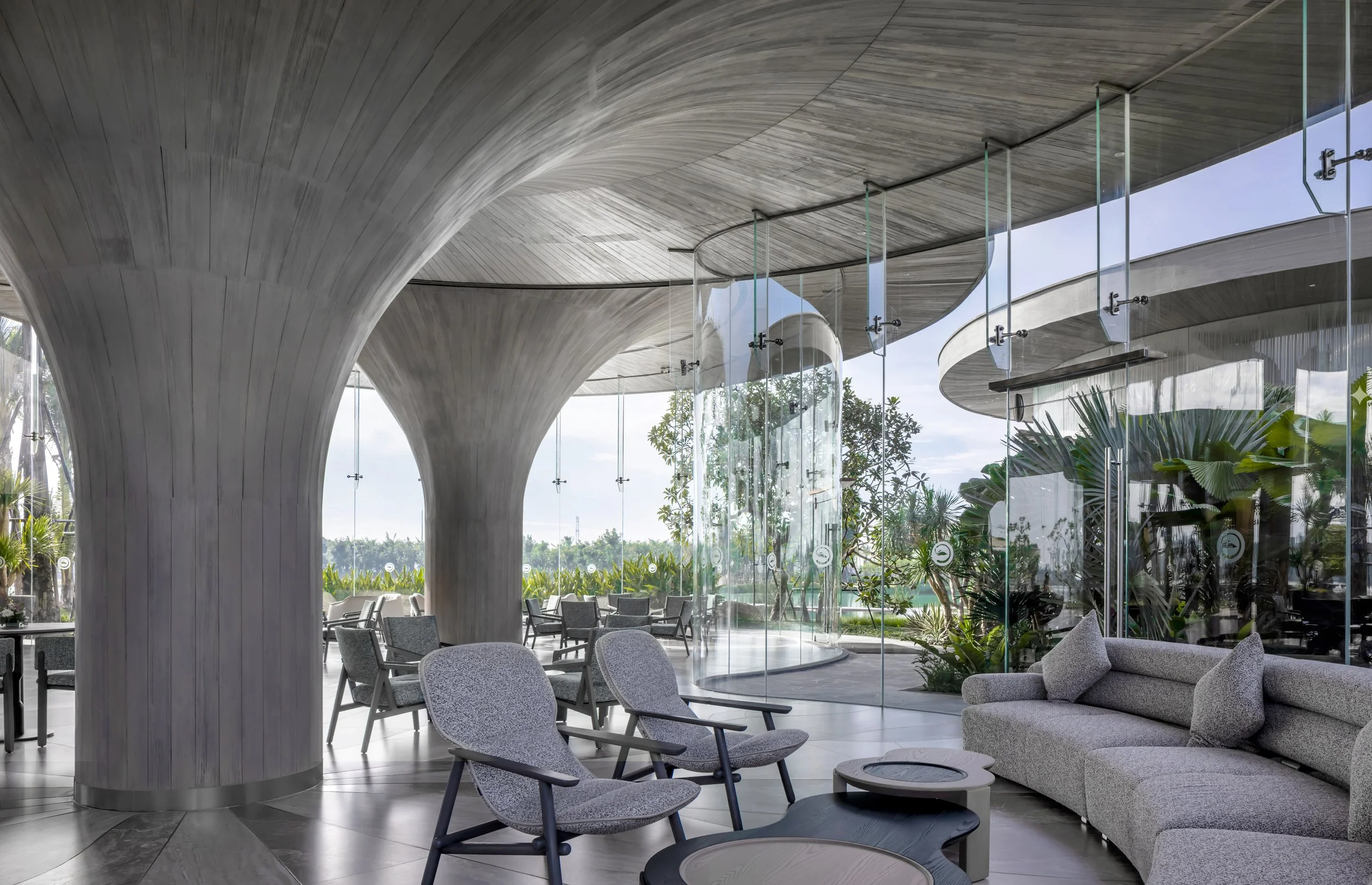
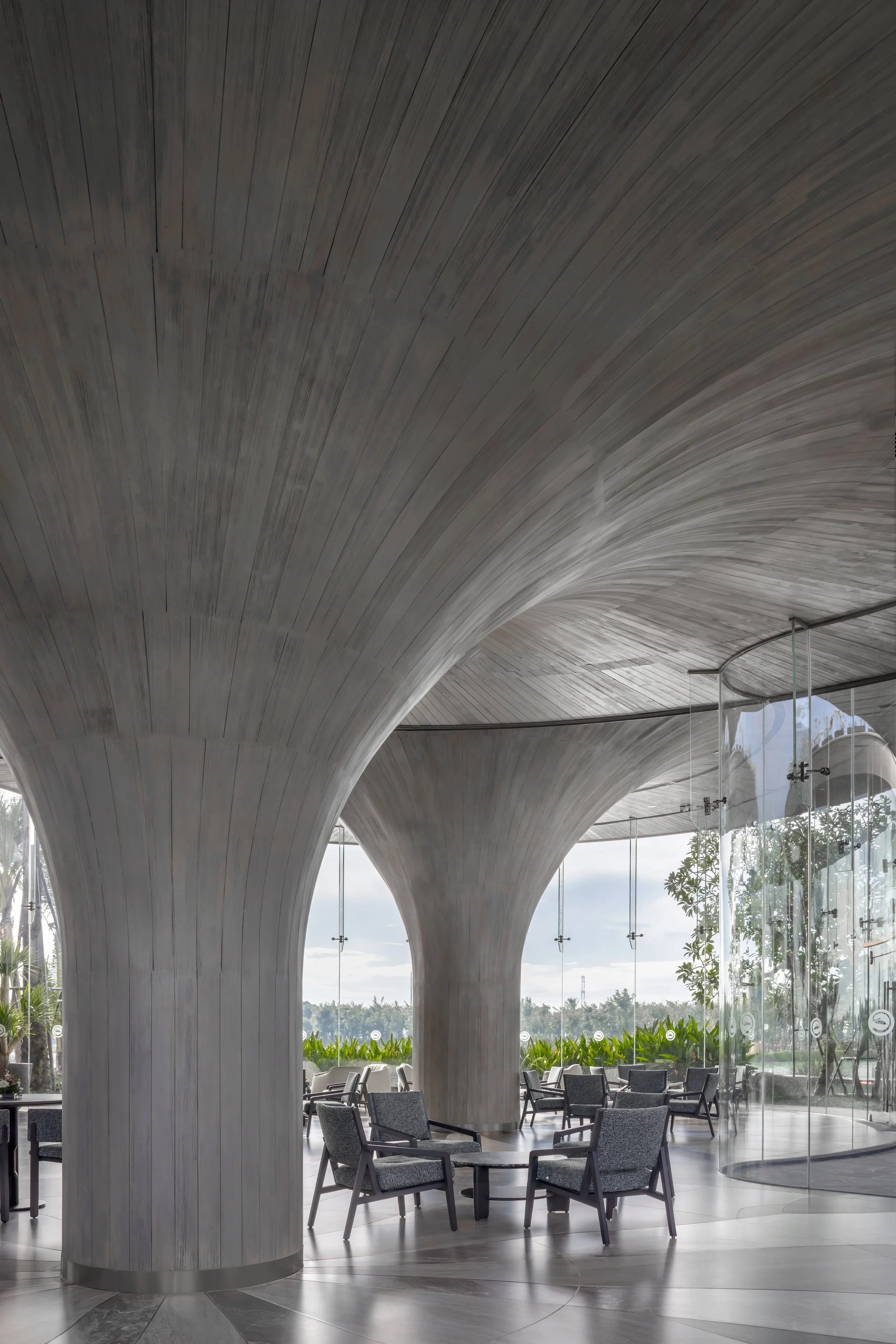
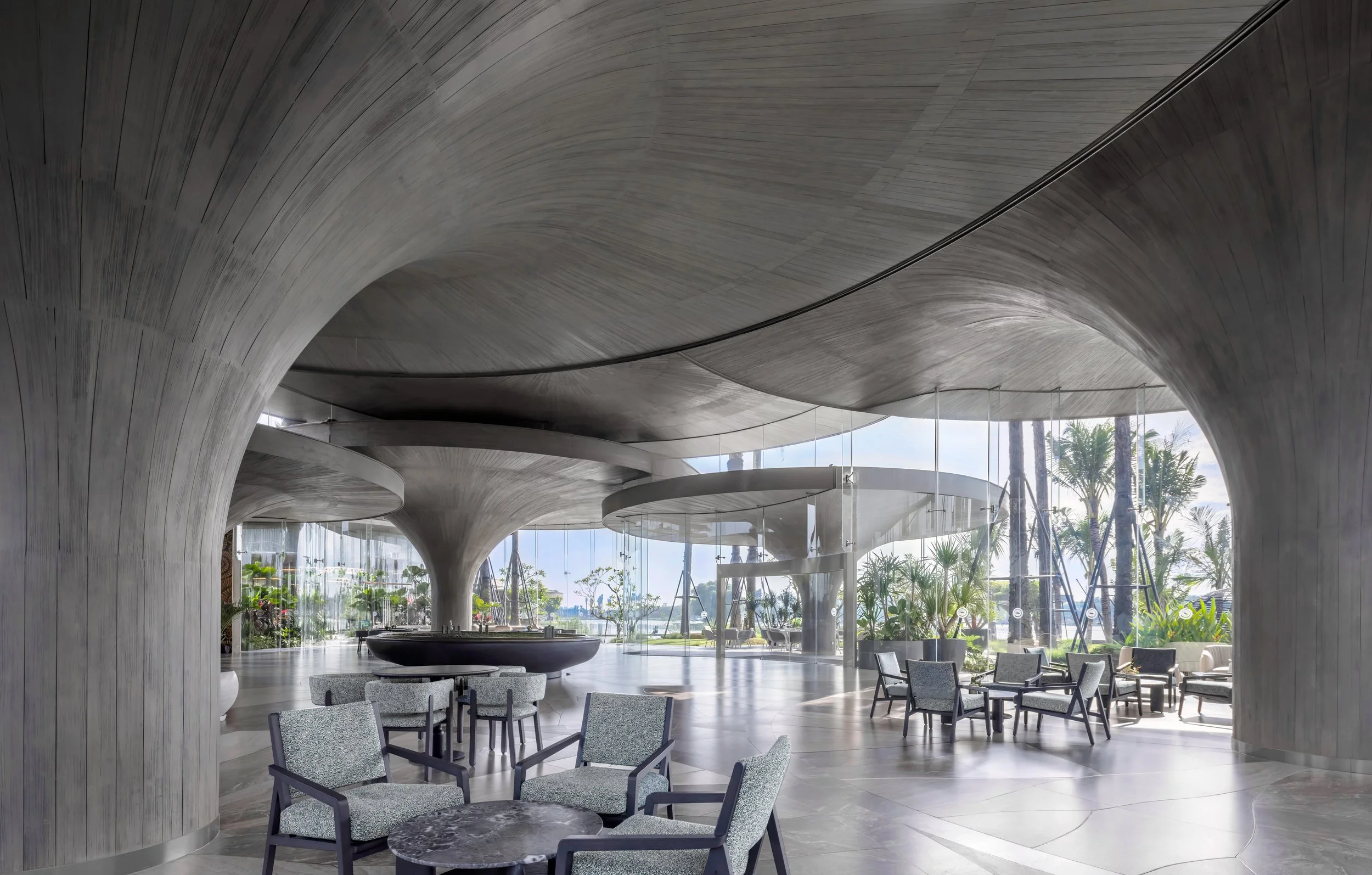
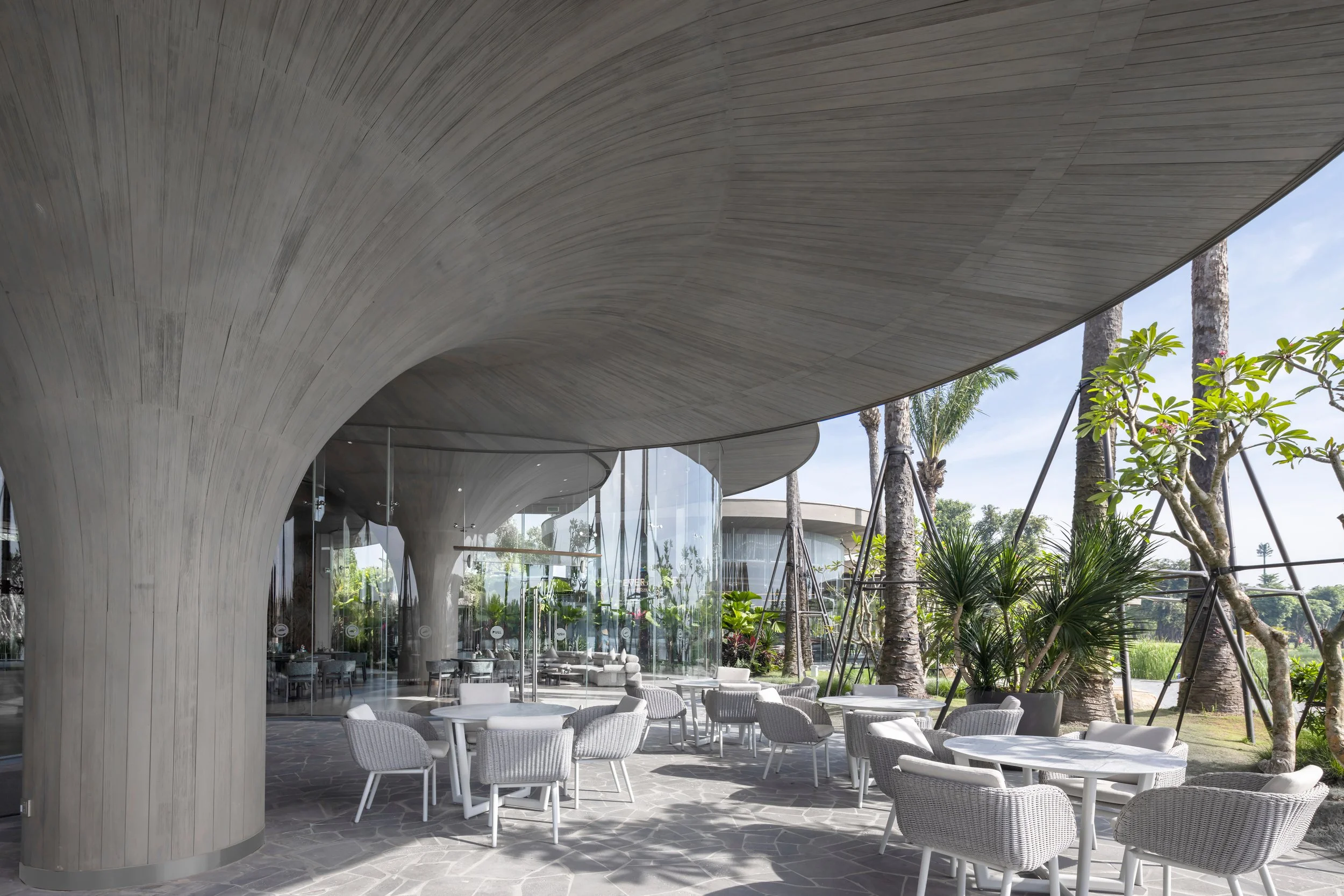
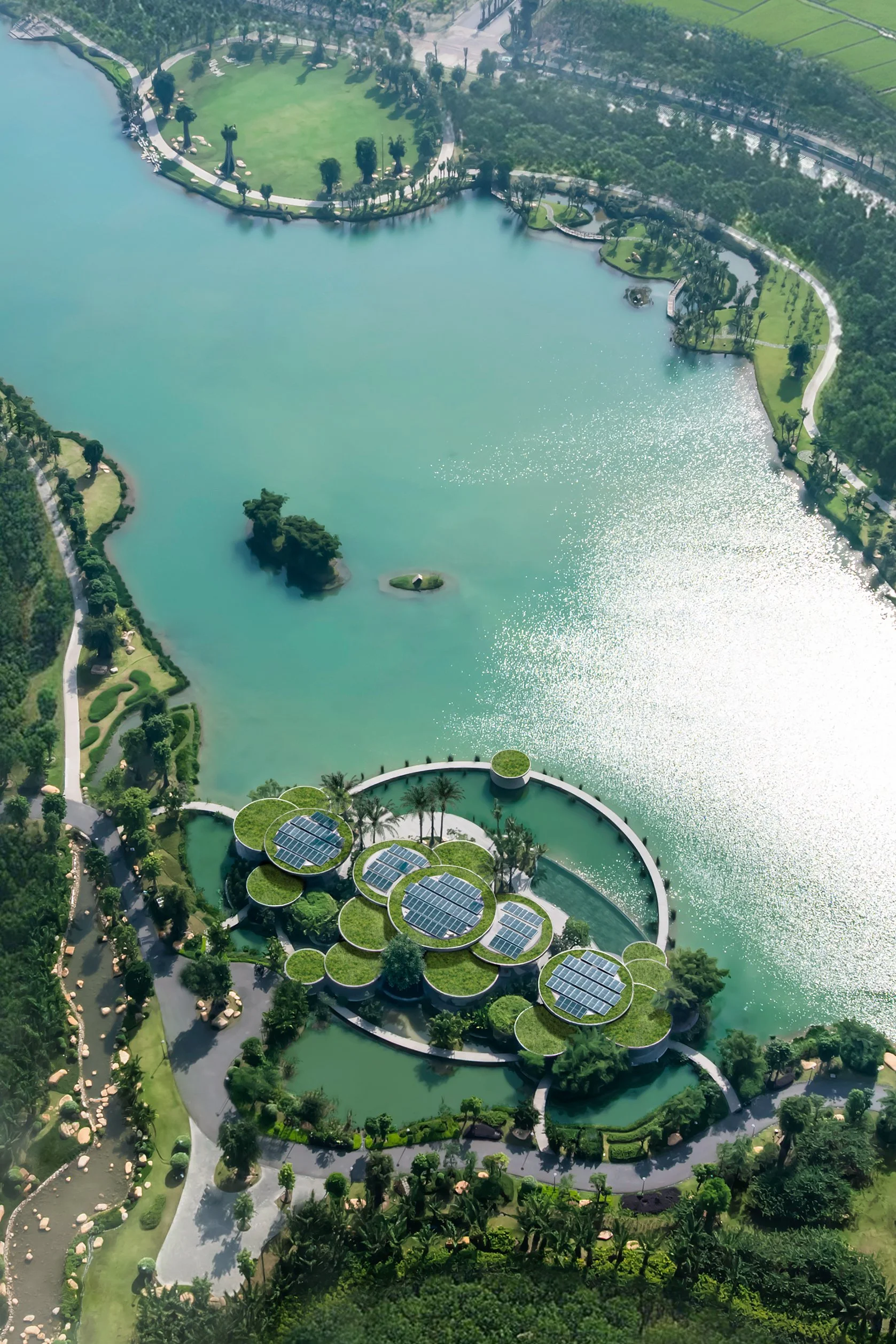
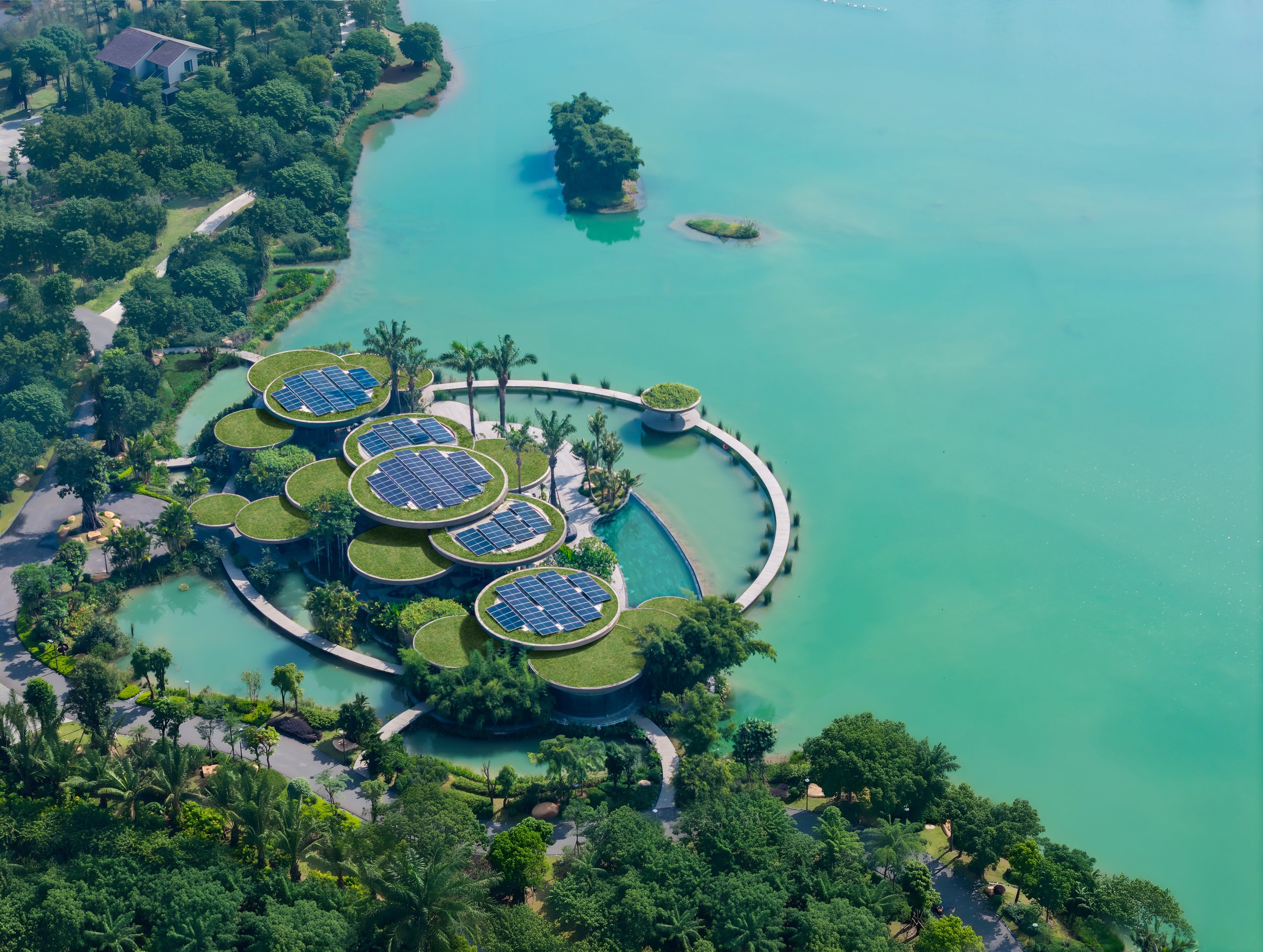
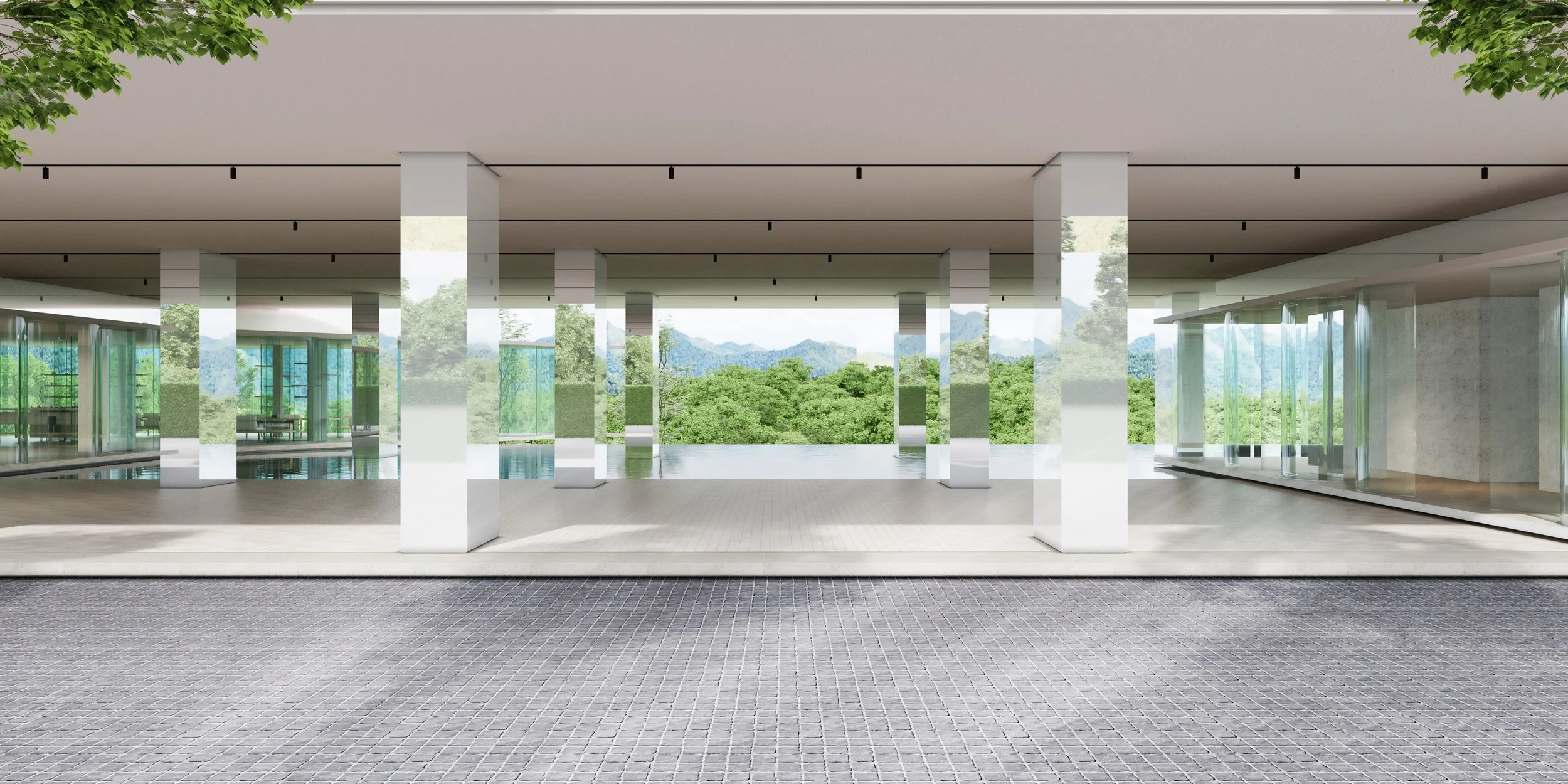
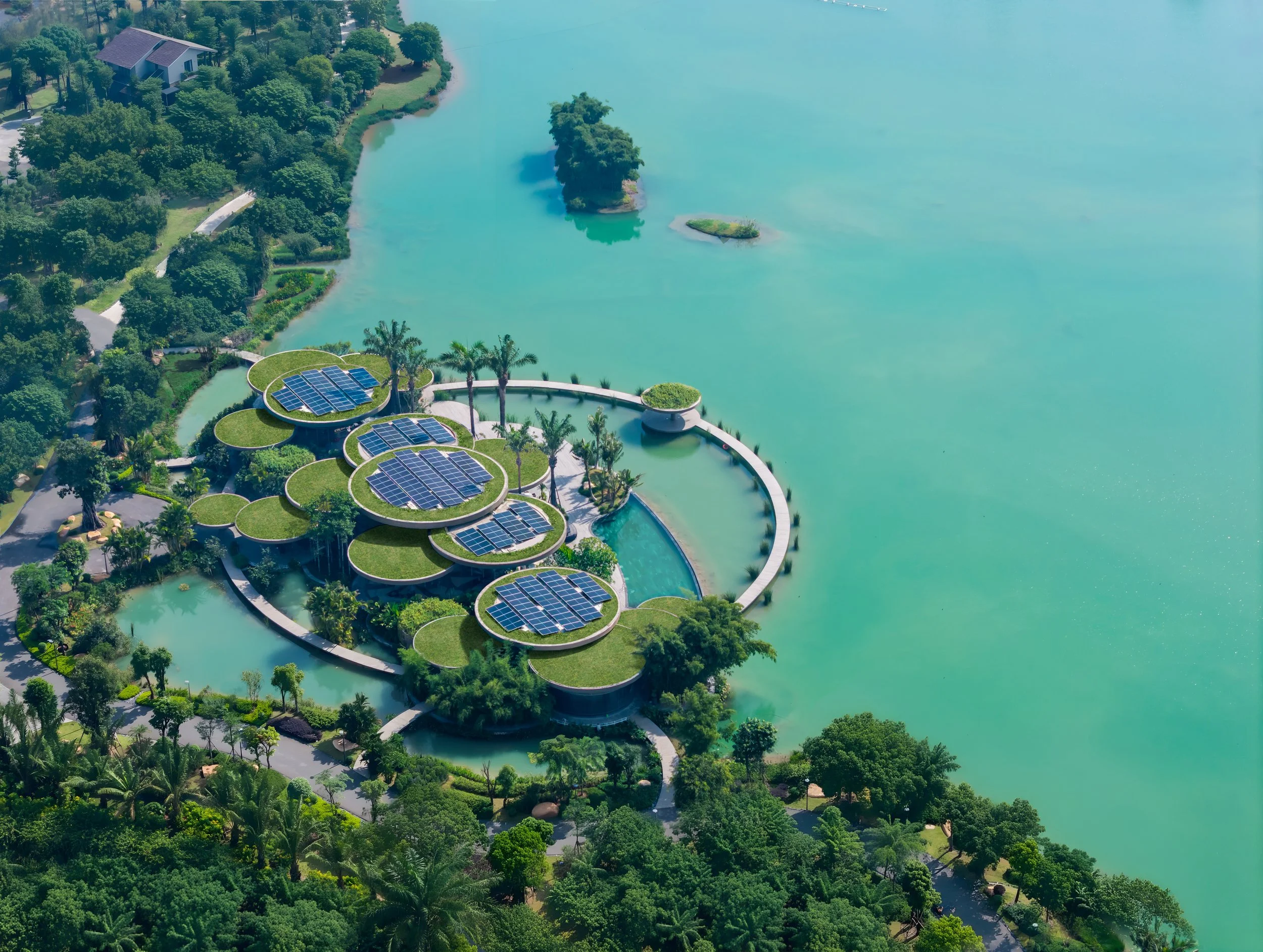
Guided by this spirit, the building is composed of multiple small volumes interwoven beneath the forest canopy across a usable area of approximately 2,000 square meters. Each functional block is positioned at varying elevations and connected through curving pathways and reflective water surfaces, forming a spatial journey that shifts continuously between openness and stillness, brightness and shade. Moving through the clubhouse feels like strolling through nature itself: energetic zones such as the restaurant and children’s play area open widely toward the lake, while quieter areas like the spa, lounge, and meditation spaces retreat into shaded pockets of greenery. With its dispersed layout, the building nearly disappears when seen from afar, minimizing visual impact while enriching the sensory experience, where light, wind, and water subtly guide each step.
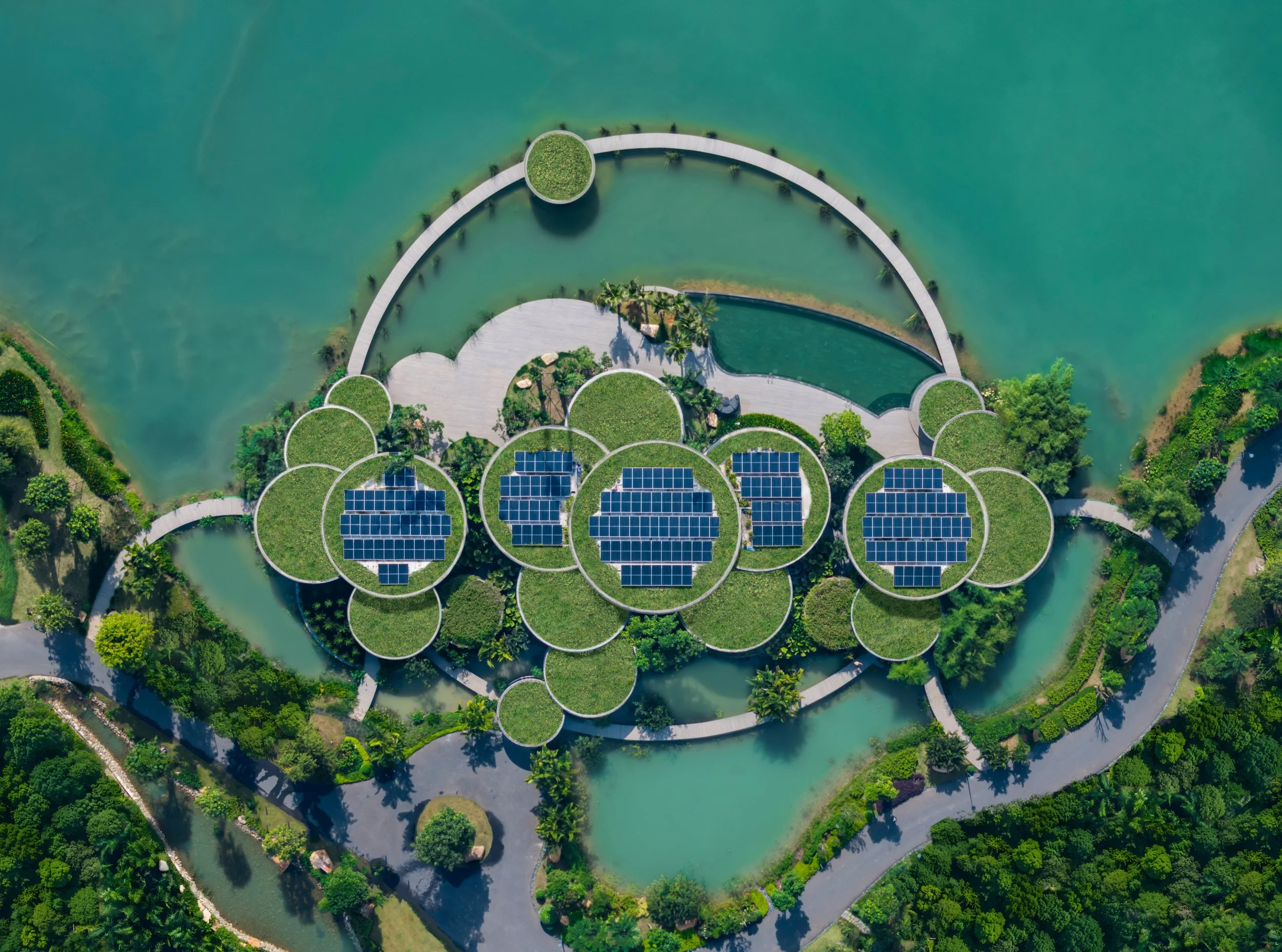
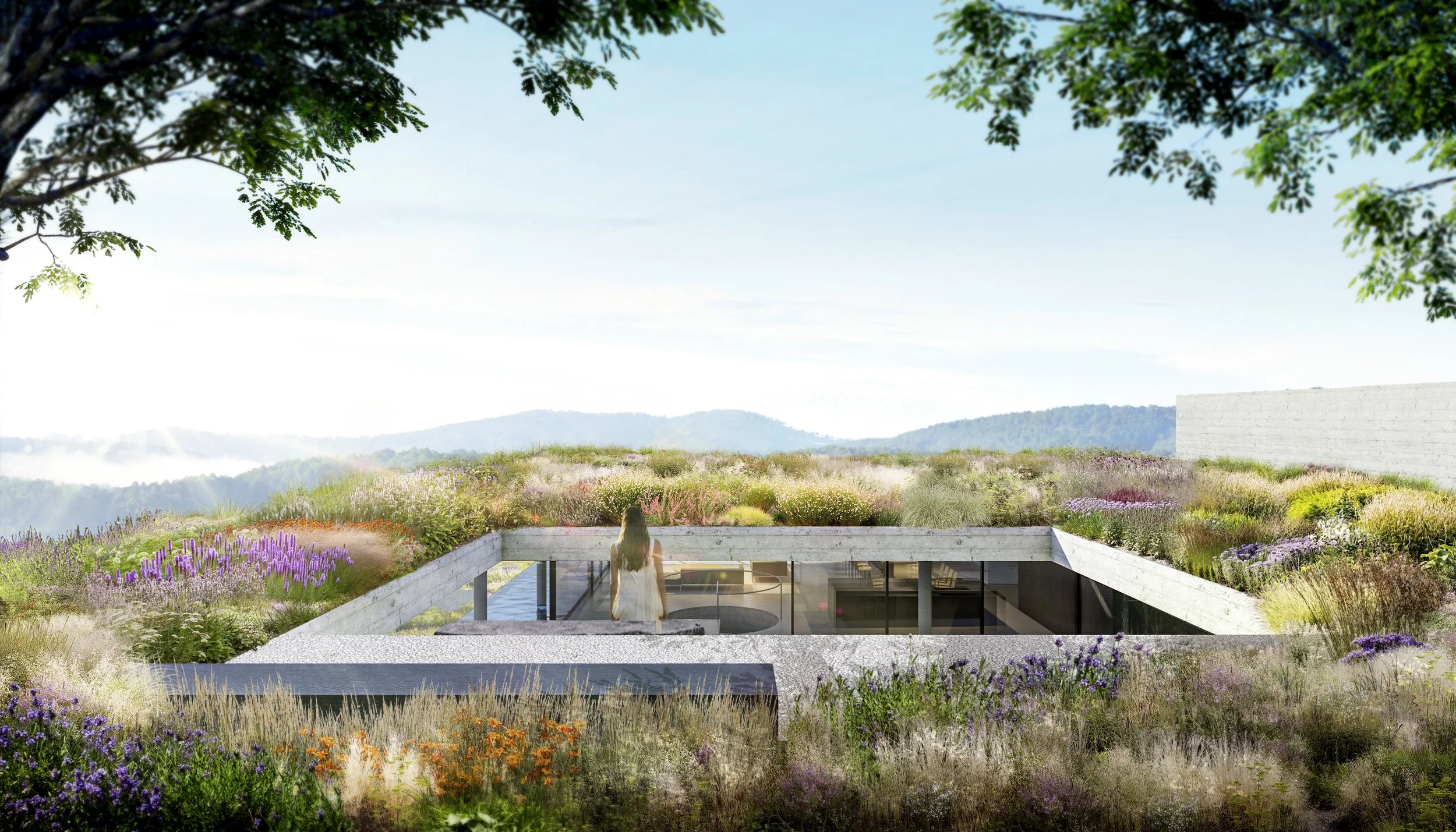
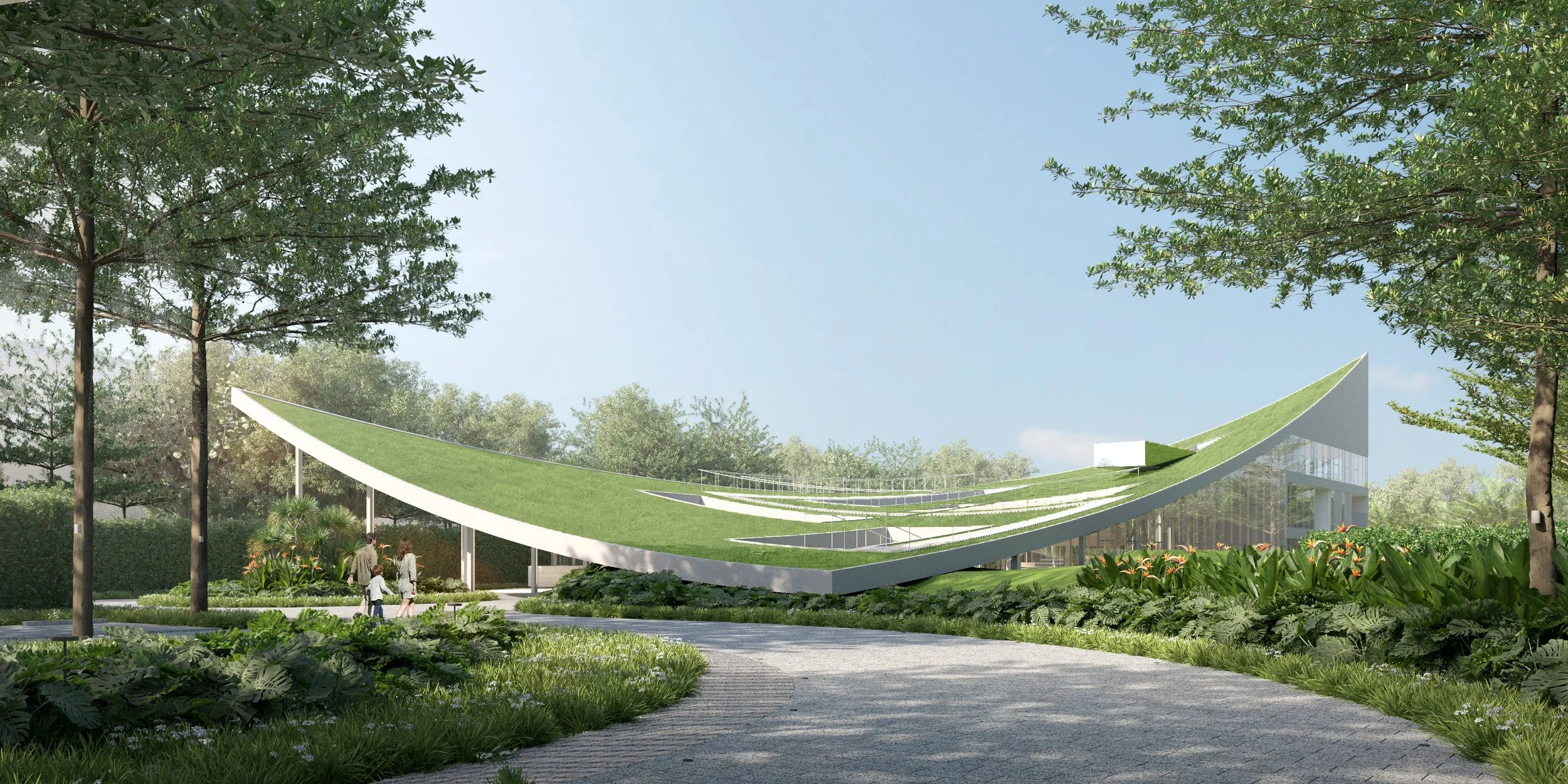
The project’s sustainable character is expressed most clearly through its multi-layered green roofs, one of its defining design features. Three main roof clusters composed of circular forms at varying heights create a soft, undulating topography that blends naturally into the surrounding forest canopy. The roofs are entirely covered with native plant species, forming a self-sustaining micro-ecosystem. This living layer reduces heat absorption, enhances natural cooling, provides habitat for birds and small wildlife, and filters rainwater before returning it to the lake. The roof profile gently lowers at the edges and rises toward the center, allowing daylight to be moderated throughout the day, reducing direct solar radiation and maintaining a cool microclimate. Through this approach, tropical adaptive architecture is expressed naturally, with form, ecology, and function operating in the same rhythm.
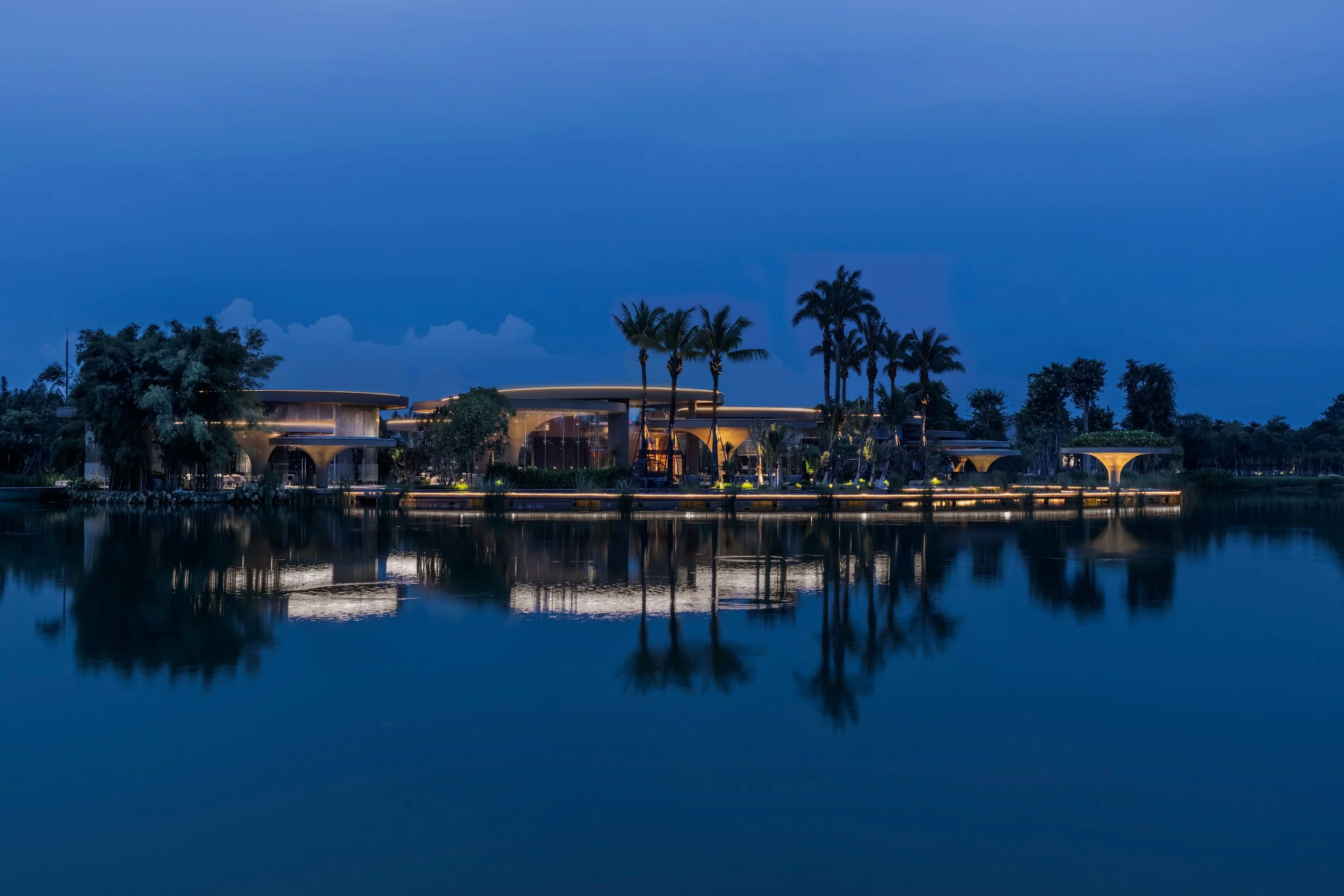
Viewed from the water, the clubhouse rests lightly on the landscape, almost as if floating. Its direct relationship with the lake allows users to sense the interplay of water, light, and horizon in a tangible way. The building’s height of 7.2 meters is carefully calibrated to maintain harmony with the surrounding villas while opening uninterrupted views across the entire site. The design conveys a clear message: architectural identity does not come from spectacle, but from restraint, refinement, and sensitivity to context. It introduces a contemporary approach to resort architecture, where the boundaries between inside and outside, between human and landscape, between light and shadow, are handled with softness and fluidity.
At a deeper level, Lotus Clubhouse becomes an architectural statement: the future of architecture lies in resonance with nature, not dominance over it. Sustainability here is not defined merely by systems or technology, but by an understanding of the environment’s essence and a disciplined, respectful approach to form-making. The building honors nature through its quiet presence: still yet never static, light yet deeply grounded, luminous without the need to dazzle.
This design ethos is evident throughout: architecture is shaped as a living ecosystem rather than a singular object; the dispersed layout reduces environmental impact and promotes biodiversity; the green roof acts as a second landscape layer, uniting art, ecology, and climate responsiveness; and the architectural identity finds balance between expression and humility. Lotus Clubhouse is more than a resort building – it is a way of thinking, a way of living, a new way of telling the story of harmony between people and the natural world.